Thursday, September 9, 2010

Fricks Lock

Located near the banks of the Schuylkill river, in Chester county lies a historic town with a futuristic presence. Fricks Lock was once a booming canal town and later a central hub for the railroad industry. Now the town resembles a post-nuclear holocaust. Homes dating back to the 1700's sit boarded up, left to crumble back into the environment. It's unlikely these homes will ever be restored and lived in again. Would you want two large cooling towers staring at you through the windows?

When the Limerick power plant was built the remaining few residents of the town were bought out and forced to re-locate. PECO owns the town and keeps it under surveillance due to those who can't appreciate history, and instead of helping to restore choose to destroy.

Monday, September 6, 2010

Abandoned on the Schuykill River

In the September zine of Outta the Way, we take you urban exploring along the banks of the Schuylkill river. First we'll visit a historic town left unkempt due to nuclear energy staring down it's back.

Than we take a look at a large industrial park, with a historic distillery located inside, that's being taken over by the same land it invaded many years before. Than it's off to pay homage to the "Abandoned Luncheonette"; and a nearby modern pizza restaurant fighting off years of decay and abandonment.

Lastly we'll show you one of the most famous and controversial places in Pennsylvania, which now lies in a near desolate ruin. Walls crumbling in as the roof collapses above, weeds poking their way back through sidewalks, and enough horrifying tales to make anyone's skin crawl.

Monday, August 30, 2010

Wallace-Cross Mill


In a world full of technology and everyone afraid to either live with, or without it, I always find comfort in a place where time seems to have stopped. Tucked away on a rural road in southern York county lies one of these hidden treasures.

The Wallace-Cross mill was built in 1826, and is a rare example of a water powered grain mill. Most of these mills have been destroyed or have been upgraded tremendously. This small rural mill was able to bypass all this technology and was still operating successfully up until the 1980's.

Today the mill has been restored to how it looked in the 1950's, during it's pinnacle time when the mill was in operation 24 hours a day and 7 days a week. The mill also contains exhibits as well as operational equipment and is open for public tours.

Saturday, August 28, 2010

Great American Holly Tree

Located on the grounds of the Indian Steps Museum, hovering higher than the two-story museum, Is thought to be the largest American Holly tree in North America.

The tree was just a tiny seedling when the Pilgrims originally landed at Plymouth Rock. Today the holly tree acts as a living American artifact.

Each year a small branch is taken from the tree to commemorate the museum and the beautiful land that surrounds it.

Sunday, August 22, 2010

Indian Steps Museum


Embedded in the walls of the Indian Steps Museum are thousands of artifacts from various tribes of Native Americans. These relics are placed in such a way as to tell their story and to forever share their history and ancestry with visitors from all over.

The museum originally came to fruition after local Attorney John Vandersloot purchased a tract of land near the Susquehanna river. While excavating the land he unearthed numerous artifacts including arrowheads, stone tools and pottery. Some of these findings predate even the Egyptian pyramids.

In 1908 Attorney Vandersloot began to build a museum to forever enshrine his findings. In 1912 the museum was completed. Inside you'll find beautiful stained glass windows, a large sandstone table, stone stairs, and stone fireplaces all of which help to enrich the natural beauty.

After Mr. Vandersloot's passing the property was acquired by a few of the utility companies who operate nearby. Eventually the property made it's way into the hands of the Conservation Society of York County. Today they still maintain the museum, which has been regarded as one of the finest museums in the United States, as well as the nearly ten acres of beautiful river hills that surrounds it.

Saturday, August 14, 2010

Codorus Furnace Phantoms


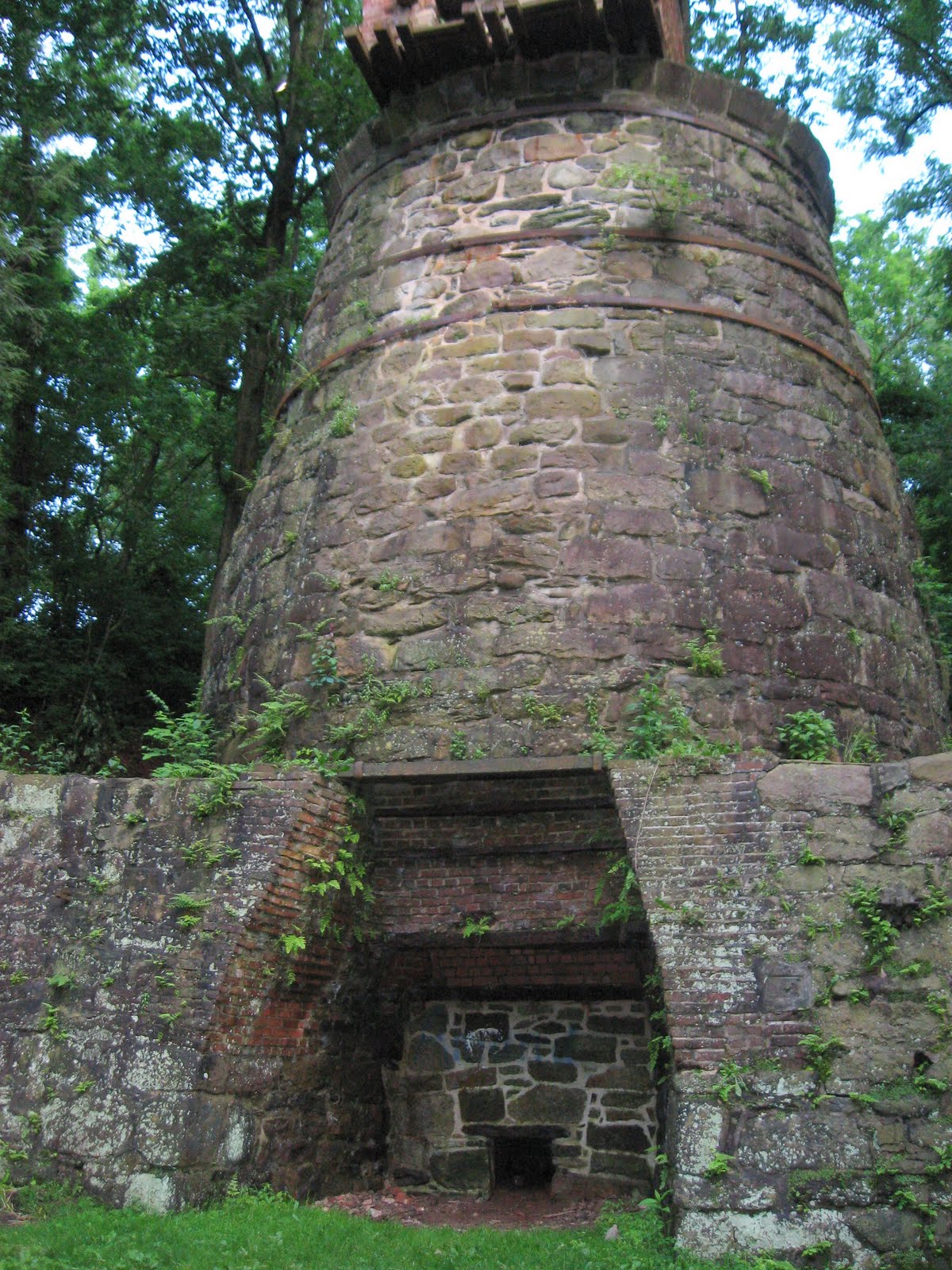
Hidden along back roads near the Codorus creek lies an industrial treasure from centuries past.

The Codorus furnace was first built in 1756 by William Bennet, on land he acquired from William Penn. Bennet only operated the furnace for 6 years before selling it. The property eventually made it's way into the hands of James Smith. Mr. Smith was a member of the Continental Congress, as well as a signer of the Declaration of Independence, but apparently not very business savvy. After losing $25,000 he also sold the property.

Not all times were hard for the furnace. During the Revolutionary War, and the War of 1812, the furnace supplied the Continental Army with cannons and cannon balls. The furnace also helped to replenish General Washington and his troops dwindling supplies, during their harsh winter at Valley Forge. Surprisingly this small furnace helped to regularly employ 60 men until operations ceased in 1850.

Though not everyone believes all who were in the industry have completely left. Numerous spirit investigators and paranormal groups believe there's still a spiritual presence in the area. Many local passerby's have also spotted a woman in a white dress roaming around the furnace and it's surrounding areas.

Monday, August 9, 2010

York County Hidden Treasures


Wallace-Cross Mill
Originally uploaded by B.B. Bellezza
In the August Outta the Way zine we'll take you on a stroll through the backwoods of rural York county. We'll take you on a visit to a few industrial giants from the past, including an iron furnace haunted by spirits, and an old family grist mill. Take a tour of a home built to celebrate the Native Americans. Walk amongst the thousands of artifacts on a land the Native Americans found to be very important. Lastly we'll visit a beautiful rural train town, still looking eerily similar to the days of the 1800's. Still awaiting it's chance to fully blossom. So get outta the way, because we're going Outta the Way!