Showing posts with label pa. travel. Show all posts

Monday, November 7, 2011

My Memories: Digital Scrapbooking Give-Away


November is the month for art every day. Folks around the World are encouraged to be creative and artful. In celebration I decided to share "My Memories", not so much my personal experiences but a new software I recently uncovered.
My significant other first introduced me to this digital scrapbooking software. On first mention of it I'll admit I wasn't all that enthused. I thought the idea was ingenious and creative, but it didn't peak my interest too much. The more days that passed the more she began to rave. Finally I took a look and played around with the software myself. Pretty soon we both found ourselves immersed in the software, and began designing new blog headers.

Since then I have begun to realize the potential and the ease at which you can make numerous designs. I have also been creating digital scrapbook pages that I can use to forever remember our unique travels. Putting these pages together has helped me to recall all the fun and interesting moments we've shared, while allowing me to create a digital photo scrapbook that will last forever.

November is the month to be creative and "My Memories Suite" is a fun, unique, and easy way to get your creative juices flowing!

My Memories has given me a copy of their digital scrapbooking software to giveaway!

To enter to win My Memories, pick out your favorite paper pack or layout. Then leave a comment below with the name of your favorite. Make sure I have a way to get in touch with you if you win!

If you don't win or can't wait to get started, I have a great deal for you! Get the MyMemories Digital Scrapbooking Software $10 off!! Find it here MyMemories Scrapbooking Software and use code STMMMS45991 when you check out. Plus, after you purchase the software, you receive $10 off in the MyMemories store. That's a total of $20 off!!

**Make sure to use the code above to get the discount. (Tip: cut and past the code to make sure you get it correct!)

Giveaway winner will be announced on Wednesday November 16, 2011 2pm EST.


Thursday, September 29, 2011

Pioneer Tunnel Coal Mine


Pioneer Tunnel is a horizontal drift mine that goes 1800 feet into the side of the Mahanoy mountain. For a small fee, you can get an educated tour of the mine yourself. You’ll ride in an open mine car that runs on a battery-operated motor. Your guide will even be a miner himself, or a retired one. During the 35-minute tour, you’ll learn how coal is mined from underground. You’ll see large coal seams where the mining was done and even portions of a petrified tree, most of which is displayed in the Smithsonian.
At one point during the tour, you’ll even see nothing as they turn all the lights out to show you how dark it really is in there. You literally can’t see your hand in front of your face. Not to be alarmed, they turn the lights back on. They’ll show you some replicas of mining tools past used, such as dynamite and canary birds.

The Pioneer Tunnel was an active coal mine in the early 1900’s. It ceased operations in 1931. In May of 1963, the mine was opened to the public. The mine is inspected daily by a mining foreman and 100% safe, although chilly with its year-round temperature of 52 degrees.

While there, you can also ride on the Henry Clay. This is an old time locomotive, built in 1927. It’s one of the oldest running steam locomotives. It was used to haul coal from the strip mines. While on the tour, you’ll learn more about strip mining as well as see an abnormally thick seam of anthracite known as the “Mammoth Vein.” Steam shovels pulled millions of tons of coal from the area leaving a wall of solid rock 150 feet high and as far westward as you can see. You’ll also notice a relic of a bootleg coal hole. Those who were willing to defy trespassing laws and risk cave-ins would brave the mines so they could heat their homes.
The train ride is ¾ of a mile long and goes around the Mahanoy mountain, giving you some scenic glimpses of the town of Ashland below you. Outta the Way recommends the visit even though there is a fee. You too, will find why it is consistently voted as one of the top 10 spots to visit in PA.

Thursday, September 22, 2011

Historic Stewartstown Railroad


If the “Little Engine that Could” needed a track to run on, the Stewartstown Railroad would be a perfect fit for it, appropriately called the “Railroad that Refused to Die.” This tiny little railroad, located in Southern York County, has quite a lot of history.
The railroad began operation in 1885 carrying agricultural produce, and passengers 7.5 miles to the town of New Freedom, where the tracks connected with the North Central Railway, which connected to Baltimore, Maryland. Local farmers helped the railroad to thrive, so much so it received the nickname the “farmer’s railroad.” During the Great Depression, this loyal group of shippers helped the railroad to survive. It didn’t hurt that most of those shipping owned some stake in the railroad also.
In 1939 the railroad made a large financial decision that helped them to succeed once again. They had changed the locomotives from stream-powered to gas-powered. This proved to be a wise decision as the railroad continued running up until 1972, while most others in the country went to the wayside. In 1972 shortly after the Pennsylvania Railroad merged with the Penn Central Railroad, Hurricane Agnes tore through the countryside. The Stewartstown Railroad and Station House survived destruction, though the rail tracks owned by Penn Central Railroad didn’t fair as well. Penn Central was already in a financial decline and they refused to fix the tracks, bringing the Stewartstown Railroad to a halt. The Railroad remained abandoned until 1988 when Pennsylvania’s Department of Transportation restored the rail line. The railroad’s return would be short lived, however, shortly afterward their largest customer folded and the railroad closed again. In 1992 the County of York fought for the rail line previously owned by Penn Central Railroad. Eventually the County got its way; the Railroad terminated its lease on the lines thus starting the Rail Trail, connecting York with Baltimore on a hiking and biking trail.
In 1997 the railroad and station were put on the National Register of Historic Places. Shortly thereafter the railroad started carrying tourists on round trips to New Freedom. That ended in April 2004 after the train derailed. The railroad has been practically forgotten and abandoned since then. The station house is still standing, though it is beginning to deteriorate. The interior of the station looks the same as it did on its opening on December 28, 1914. A short walk from the station is the engine house. What distinguishes this one from most is that it was used for its intended purpose up until the railroad stopped operations. The Stewartstown Railroad has the distinction of quite possibly being the only railroad in the state that has maintained its right of way through its entire existence.
Though the railroad sits abandoned today, there are a few historical groups hoping to revive this piece of history. I think they can, I think they can, I think they can.
Learn more about saving the railroad here!

Saturday, September 17, 2011

Yuengling Brewery History


When David Yuengling began brewing beer in his home in Germany, I’m sure he had no idea what his legacy would be. After Mr. Yuengling and his family immigrated to the United States, he would change America forever. In 1829, he started the Eagle Brewery on Centre Street in Pottsville, Pennsylvania. But things weren’t easy. In a short 2 years the brewery was destroyed by a fire. Refusing to give up, Mr. Yuengling relocated to Mahantongo Street in Pottsville, and strive to bring his dream to fruition.In 1873, his son Frederick joined forces with David and the brewery changed their name to D.G. Yuengling and Son, still keeping the recognized eagle that emblazoned their products. From here Yuengling would grow rather quickly. By 1895 they had started a bottling operation. Throughout the years and family passings, the brewery continued to thrive, while still maintaining their family roots.
But things were soon going to get tough. In 1919 when Prohibition was passed, the family legacy of Yuengling almost came to an end. But thanks to some quick thinking, the brewery found a few ways to survive. They started brewing near beers, essentially a nonalcoholic brew, but what may have saved the brewery was an idea to make ice cream. They purchased a separate building across the street from the brewery, where the tasty treat was made.
On the brewery’s 100th anniversary in 1929, the closest thing to beer they were brewing was their near beer. But when Prohibition ended in 1933, it didn’t take long for Yuengling to get rolling again. They sent a special batch of beer to President Roosevelt. Finally, Yuengling was able to get back to doing what it does best, brew beer. From this moment on there was no more looking back. As the brewery kept with its great, long, traditional recipes, its fan base continued to grow. In 1976, the brewery was recognized as being the nation’s oldest brewery. And in 1985, they were placed on the National Register of Historic Places.
But Yuengling had another drastic change shortly thereafter. In 1987 due to a larger demand for darker beers, the brewery reintroduced their lager. This would forever change the brewery. The continued growth and success only kept the family ties stronger.Today the lager brand is so popular, folks in the Mid-Atlantic states need only ask the barkeep for a lager and, without a second thought, will be poured a nice cold Yuengling.

Saturday, August 27, 2011

Little League World Series: Present


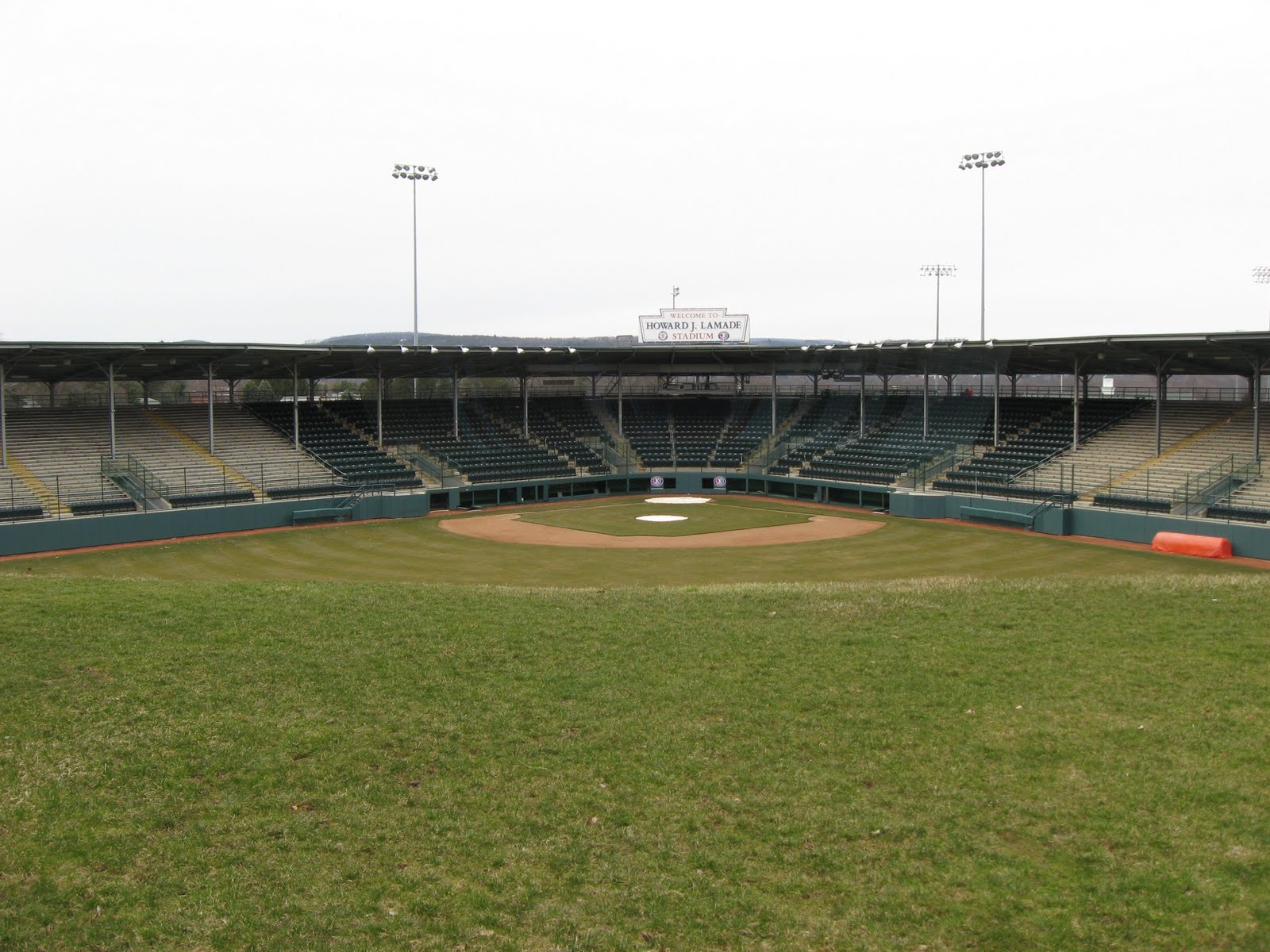
Shortly after the Carl Stotz field was replaced by the Howard Lamade Stadium, Little League baseball began to flourish worldwide. Youngsters from foreign lands who had never known the game were quickly beginning to dominate. Japan and Taiwan had won 7 of the past 8 World Series. In 1975 the issue began to concern the officials of Little League. They then fell under much scrutiny and amid controversy banned all Non-United States teams from competing. The ban was short lived and the following year youngsters worldwide were once again able to enjoy America’s pastime. Luckily Little League was able to bypass that brief dark moment in their history, because since then the sport has flourished immensely.

Today there are over 200,000 teams spanning every state in this country and more than 80 others. In 2001 a brand new larger stadium was opened. The Little League Volunteer Stadium was placed directly behind the Howard J. Lamade Stadium. Today the two stadiums host all playoff games and of course the World Series. Little League baseball doesn’t receive nearly as much attention as it deserves. Without the international acclaim, the sport of baseball may have quietly perished. The little league helped to spread the word throughout the globe, opening the door of opportunity for many young men in impoverished countries a place to become superstars. This sport helps to teach young adults the importance of teamwork, dedication and camaraderie, not only amongst themselves but for the entire world.


Sunday, August 14, 2011

Clyde Peeling's Reptiland

In 1964 acclaimed herpetologist Clyde Peeling saw his passion and dreams come true with the opening of Reptiland. His vision to give visitors an up close and personal look at natures less desirable creatures had come to fruition. The zoo holds some of the World's deadliest snakes. From the highly venomous mambas, cobras, and vipers to the bone crushing constrictors, pythons, and anacondas.

The exhibit hosts daily shows as well as live feedings. But besides vicious vipers, Reptiland also inhabits various other reptiles and amphibians. Docile tortoises, ornery alligators, and delicate yet highly dangerous poison dart frogs. Over the years Clyde has seen his dream grow immensely. Today the accredited wildlife park is over 6,500 square feet and is home to over 40 species of animals. Clyde himself has even been featured on Conan O'Brien. Not too bad for a gentleman who enjoys being nicknamed 'The Lizard Man."

Monday, August 8, 2011

Williamsport, Pennsylvania

In the newest zine were heading into the mountains of Lycoming and Union counties. We'll visit the small city of Williamsport and it's surrounding areas.

We start by taking a ride to a remote cemetery searching for headless apparitions. Then we pay a visit to a ghost town left decimated by the United States government. The only remains are concrete ammunition bunkers left from World War 2. Next we'll pay homage to America's pastime as we visit the birthplace of Little League baseball, as well as it's modern home. Lastly we ride back into the past. We'll take a stroll along what was once on of the wealthiest streets in America, and discover what's happened to the mansions of Millionaire's Row.

Now get outta the way, 'cause we're going Outta the Way!

Thursday, August 4, 2011

Curse of Antes Fort, Pennsylvania

There are a number of homes in the Antes Fort area that the locals swear are haunted. Maybe it's not the homes that are haunted, but that the area's cursed.

Originally the land was used by the local Andaste Indian tribe until their chief, King Wi-daagh advantageously sold the region to emissaries of William Penn. A column from the former state capital building has been placed along a nearby river bank to commemorate the event. In a protest to the erroneous deal, the chief has vowed to haunt the land. Autumn time visitors often witness a ghostly mist appearing off the waters of the nearby Wi-daagh springs.

Another rather disturbing tale involves the towns founder. The tale states that shortly after the Revolutionary War, Colonel Henry Antes engaged in an early form of biological warfare. The Colonel purchased blankets from the Harrisburg area, which he then donated to the local Native American tribes in the area. His generous deeds were actually an act of malevolence. The donated blankets were actually full of the infectious small pox bacteria. This led to the untimely death of many of the local natives. The Chief of the nearby tribe vowed revenge, the lost vengeful spirits who were innocently murdered may not have rested since.

Tuesday, August 2, 2011

Picture Rocks, Pennsylvania

The tiny borough of Picture Rocks, Pennsylvania has less than 1,000 residents, but there's a history here that's centuries old. The first European settlers settled here in 1773, though the area was sacred to Native Americans long before we came here.

Originally the Munsee Indians made the community their home. The Muncy creek supplied freshwater and fish, while the nearby rock cliffs provided a great lookout for intruders. The Native Americans found much gratification in telling their story and history through pictographs. For decades the tribe had been carving numerous sacred symbols and animals on the imposing rock walls.

These pictographs had an impression on the original settlers who named the area Picture Rocks. Sadly over many years the pictographs have disappeared. Most lost to the course of Mother nature, but others by the malfeasance of man.

Monday, August 1, 2011

Bridge to Nowhere in Lairdsville, Pennsylvania


"There it is! I can see it!"
"Where?" I say, "There behind the trees!" She's right, I can see it. We slowly pull off to the side of the rural route. We both gently slide down the embankment to an overgrown trail. I grab a stick to push thorn bushes out of our way. We slowly proceed down the dirt path. As we approach our destination, I notice the intricately designed layout. Moss and grass grow between each crevice of the bricks. We are on a bridge to nowhere.

This hidden gem fascinates me for many reasons. I can find no source as to when it was built, by whom or for what purpose. The bridge seems to be older, but constructionally sound, and appears to be modernly built.

I am always fascinated with abandoned places. Walking that bridge I felt as though I was retracing someone else's footsteps. Hmmm!! If only I knew! Maybe it's more intriguing letting my imagination run wild. What do you think?

Saturday, July 23, 2011

Adventures in Alvira, Pennsylvania


Both arms shoot up as I attempt to level myself out! I steadily balance myself as I inch across the log strewn about the wet marshy area I'm attempting to cross. My foot slips, my shoe is covered in mud. I wipe off the excess and continue over my crude bridge. Upon crossing the water soaked log, I encounter the thorns of a thistle bush. As I gently release the prickly briers from my arm and shirt, another sense of excitement rushes over me! From here I can see a crack between the doors and realize I should be able to enter. As I encounter the concrete bunker I'm happy to see it's not littered with graffiti. I poke my head inside, blackness is all I can see. I work to pry open the heavy unlocked steel door. I take a loud stomp into the concrete igloo, hoping the ground vibrations will scare off any unwanted critters. I give out a shout! The enclosed cavern echoes quite loudly for a brief time. Inside the bunker is surprisingly clean, only a few leaves are found lying on the ground. Sadly these hidden concrete bunkers and a couple historic cemeteries are all that remain in this lost town.


Shortly after the strike on Pearl Harbor, the United States government came in and seized all the townspeople's land. They were informed that a repurchase of their properties would be made available at a later date. Directly after acquiring the land through purchases and eminent domain, all the homes were burned and then bulldozed. Almost instantaneously construction began on a T-N-T factory. This explosives factory was very short lived. In less than a year after opening the United States government stopped production and closed the plant for good. Apparently the supply for explosives wasn't nearly as high as originally thought.

The only remnants of a former town are crumbled foundations, lost roads, and forgotten gravestones. This small village was ravaged by the effects of war, yet never witnessed a single battle. The poor citizens of Alvira had their town destroyed by the works of their own government who was supposed to protect them.